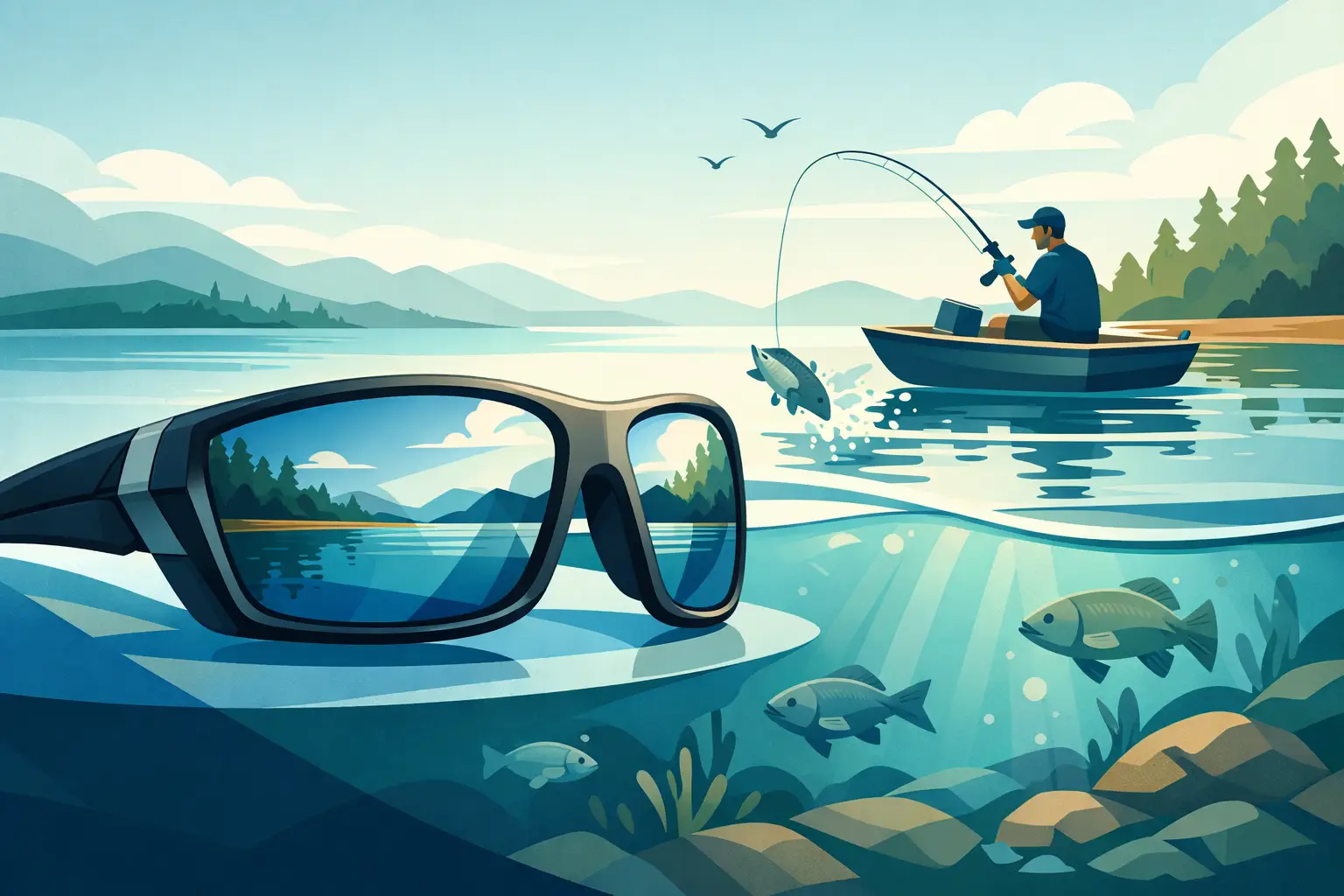
You notice bad sunglasses fastest when the sun is high, the water is throwing glare in every direction, and you miss fish that were right in front of you. The best polarized sunglasses for fishing do more than make bright days easier on your eyes. They cut surface glare, improve contrast, help you track structure and movement, and keep you comfortable through long hours on the bank, boat, or dock.
That matters whether you fish bass ponds after work, run a center console offshore, or spend weekends chasing crappie and trout. Not every pair marketed to anglers is worth buying, though. The right choice depends on where you fish, how long you stay out, and whether you need all-day comfort, better clarity, stronger coverage, or a better price.
What makes the best polarized sunglasses for fishing?
Polarization is the starting point, not the whole answer. A polarized lens filters reflected light bouncing off the water, which reduces glare and helps you see below the surface more clearly. That alone is a major upgrade over standard dark sunglasses.
But the best fishing sunglasses also need the right lens tint, solid optical clarity, and a frame that stays put when you're moving around. If the lenses distort your vision, if the nose pads slip once you sweat, or if light leaks in from the sides, you lose some of the benefit.
For most anglers, the sweet spot is a pair that balances visibility, comfort, and durability without getting overpriced just because it says "fishing" on the tag. You want eyewear you can trust in changing light and changing weather, not something that only works for one perfect sunny day.
Lens color matters more than most anglers think
The lens color you choose changes how well you pick up depth, contour, and movement. This is one of the biggest differences between a decent pair and a pair you actually want to wear every trip.
Gray lenses for bright, open water
Gray is a strong all-around option for full sun. It cuts brightness without shifting colors too much, which makes it a dependable pick for offshore fishing, large lakes, and open water where glare gets intense. If you fish mostly midday in strong sun, gray is hard to argue with.
The trade-off is that gray can feel a little flat in lower light. Early morning, overcast conditions, or shaded banks may leave you wanting more contrast.
Copper, amber, and brown lenses for contrast
Copper, amber, and brown tints are favorites for freshwater anglers for a reason. They boost contrast and depth perception, which can help when you're trying to spot grass lines, stumps, rocks, or fish movement in shallower water.
They also tend to perform better than gray when the light is mixed or variable. If you fish rivers, ponds, reservoirs, or wooded shorelines, this color range is often the most practical place to start.
Yellow or light-enhancing lenses for low light
Some anglers like yellow, gold, or other lighter tints at dawn, dusk, or under cloud cover. These can brighten your view and make details pop when the sun is not beating down.
They are not the best choice for strong midday glare, so they work better as a second pair than an only pair.
Glass vs. polycarbonate lenses
This is where the answer starts to depend on how and where you fish.
Glass lenses usually offer the best clarity and better scratch resistance. If you spend a lot of time sight fishing, running open water, or simply want the sharpest view possible, glass is a strong premium option. Many experienced anglers prefer it because details look cleaner and more precise.
The downside is weight. Glass is heavier, and while many modern frames manage that well, some anglers still prefer something lighter for all-day wear.
Polycarbonate or similar plastic lenses are lighter and usually more impact resistant. That makes them a practical choice for kayak fishing, bank fishing, travel, and active use where gear gets bumped around. They also tend to come in at lower price points.
The trade-off is that cheaper plastic lenses can scratch more easily and may not deliver the same crisp optics as a better glass lens. If value and comfort are your top priorities, polycarbonate makes sense. If maximum visual performance matters most, glass is worth considering.
Frame fit can make or break your day
A great lens in a bad frame is still a bad buy. Fishing sunglasses need to stay in place when you're casting, running the trolling motor, leaning over the gunwale, or sweating in summer heat.
Look for frames with a secure nose bridge, decent temple grip, and enough wrap to block side glare. A wrapped frame helps in bright conditions because it keeps stray light from sneaking in around the edges. That can make a bigger difference than many anglers expect.
Comfort matters too. If the frame pinches behind your ears or feels heavy after an hour, you will stop wearing it. The best pair is the one that still feels good halfway through the trip.
Coverage and protection are not optional
Fishing eyewear is not only about seeing fish better. It is also eye protection.
Hooks fly. Sinkers swing. Wind pushes line in unpredictable ways. A good pair of polarized sunglasses adds a layer of safety every time you cast or fish around other people. Full UV protection matters too, especially if you spend long days on reflective water where sun exposure adds up fast.
For that reason, avoid bargain pairs that advertise dark lenses but do not clearly offer polarization and UV protection. Dark tint without proper protection is not enough.
Best choice by fishing style
The best polarized sunglasses for fishing are not exactly the same for every angler.
If you fish freshwater lakes and ponds, copper or brown lenses in a lightweight wrap frame are usually the most versatile. They give you strong contrast, useful visibility around cover, and enough flexibility for changing light.
If you fish saltwater or open water in full sun, gray lenses are often the better fit. They handle brightness well and keep colors more natural when the sun is glaring off the surface all day.
If you fish at dawn, dusk, or under heavy cloud cover, a lighter contrast-enhancing lens can help. Some anglers keep a second pair for these times rather than forcing one lens color to handle every condition.
If you are rough on gear, prioritize impact resistance, frame grip, and value. If you sight fish often and care most about optical sharpness, step up for better lens quality.
What to avoid when shopping
Some sunglasses look the part but fall short on the water. Fashion-first frames with flat fronts and minimal side coverage can leave you dealing with glare from every angle. Cheap polarized lenses may technically cut glare but still introduce distortion or haze.
Watch out for oversized marketing claims too. No pair of sunglasses magically reveals every fish. Water clarity, sun angle, depth, wind, and bottom composition all still matter. Good fishing sunglasses improve what you can see. They do not change the conditions.
It is also smart to think about replacement cost. If you regularly fish from a kayak, lean over docks, or tend to misplace gear, an expensive pair may not be the practical answer. There is real value in buying a dependable pair you will actually use without worrying about every splash or drop.
How to choose the right pair without overthinking it
Start with your most common fishing conditions. Bright open water points toward gray. Mixed light, freshwater structure, and general-purpose use usually point toward copper, amber, or brown.
Then decide how much lens quality matters compared with price and weight. If you fish hard and often, better optics and stronger materials usually pay off. If you want reliable performance at a more affordable price, there are plenty of solid everyday options that cover the basics well.
Finally, pay attention to fit. A secure, comfortable frame with good wrap and real polarization will beat a more expensive pair that slides down your nose or leaves gaps at the sides.
If you're shopping for dependable gear across changing conditions, All Weather Fishing makes it easier to find practical eyewear options alongside the rest of the tackle and equipment you already need. That kind of one-stop convenience matters when you're trying to get ready and get on the water.
The right sunglasses will not catch fish for you, but they will help you see better, fish longer, and stay more comfortable while you do it. When the glare drops and the water starts to show you more, you will know you picked the right pair.
