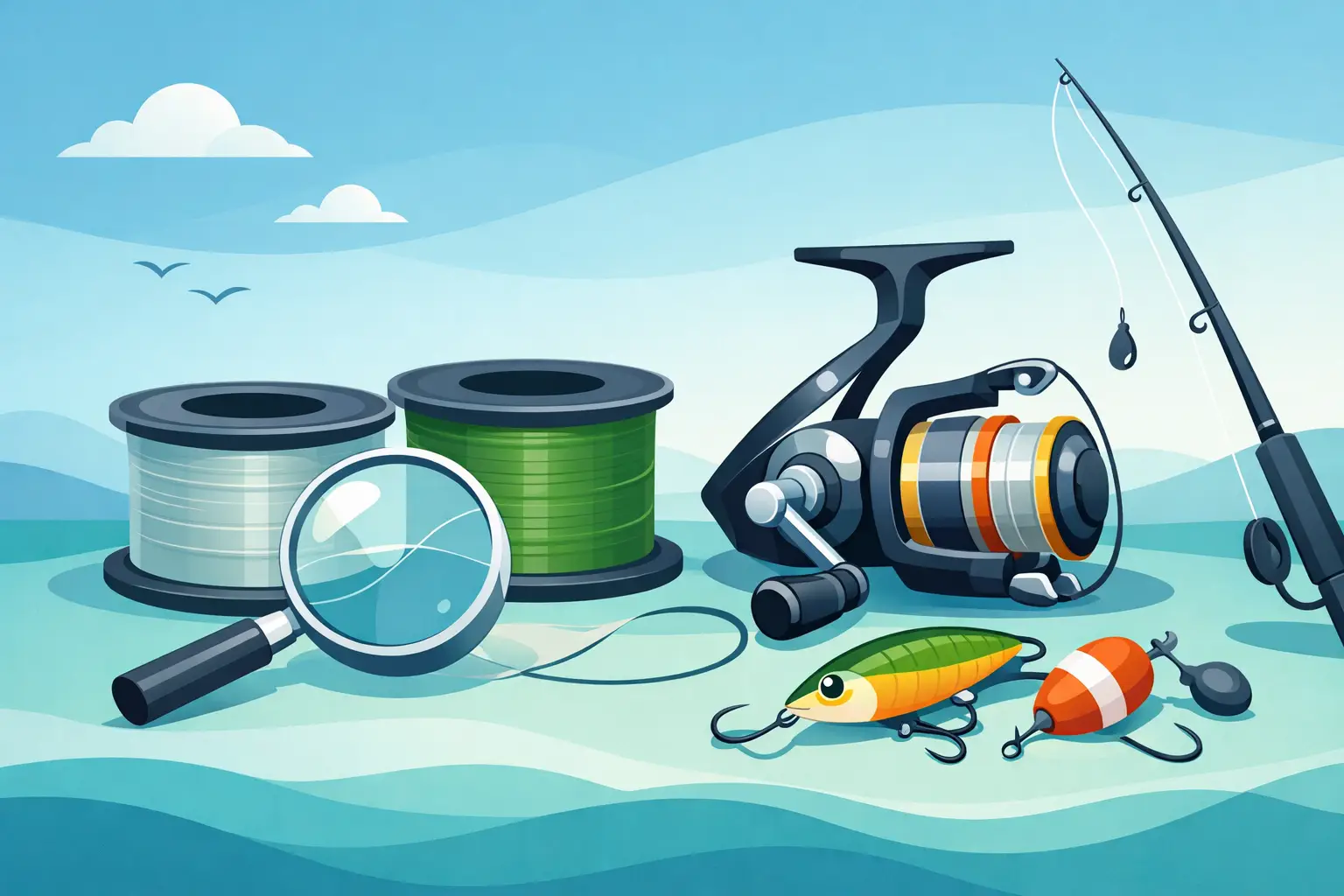
That moment when your knot slips, your lure sinks wrong, or a good fish breaks off usually gets blamed on the rod or reel. A lot of the time, the real problem is the line. If you're figuring out how to choose fishing line, the best place to start is not with brand names or price tags. Start with where you fish, what you throw, and how much margin for error you want on the water.
Fishing line is not one-size-fits-all. The right setup for bass in light weeds is different from what you want for trout in clear water or redfish around structure. Line affects casting distance, lure action, hooksets, abrasion resistance, and how much you feel at the end of your rod. Get it right, and everything feels easier. Get it wrong, and even good gear can feel off.
How to choose fishing line for the way you fish
The easiest mistake anglers make is buying line by pound test alone. Strength matters, but it is only one part of the decision. Line type, diameter, stretch, visibility, and resistance to rocks, docks, grass, and shell all matter too.
Think about your most common fishing conditions. Are you casting from shore into open freshwater? Fishing from a boat around timber? Working saltwater flats? Jigging through the ice? Those details tell you more about the right line than the label on the spool.
If you mostly fish with spinning gear and lighter lures, thinner and more manageable line usually makes life easier. If you fish heavy cover, throw frogs, or target stronger fish, line strength and abrasion resistance move up the priority list. If you fish clear water with pressured fish, low visibility can matter more than brute strength.
The three main line types
Monofilament
Monofilament is still a smart choice for a lot of anglers because it is affordable, easy to handle, and forgiving. It has stretch, which can help keep fish pinned during the fight and reduce sudden break-offs. It also floats better than some other options, which makes it useful for topwater presentations.
The trade-off is sensitivity and durability. Mono is not as crisp or as sensitive as braid, and it can nick up faster around sharp cover. It also tends to develop memory, especially if it sits on a reel for a while. For general-purpose freshwater fishing, though, mono remains a dependable option that does a lot well.
Fluorocarbon
Fluorocarbon is a strong choice when you want lower visibility underwater and better sensitivity than mono. It sinks, which helps with many subsurface lures like worms, jigs, and crankbaits. It also offers solid abrasion resistance, making it useful around rock, wood, and other rough cover.
The downside is manageability, especially on some spinning reels and in heavier tests. Fluoro can feel stiffer than mono and may be less forgiving for newer anglers. If your main goal is better feel and a less visible presentation in clear water, it is often worth the adjustment.
Braided line
Braid is built for strength, sensitivity, and thin diameter. You get a lot of pound test without a bulky line, which helps with long casts and cuts through grass better than mono or fluoro. It has very little stretch, so bites feel sharp and hooksets come fast.
That same lack of stretch can also work against you. Braid is less forgiving on sudden surges, and in very clear water it can be too visible unless you add a leader. It is also not always the best choice around certain abrasive structure unless paired thoughtfully. For heavy cover, frogging, flipping, and many saltwater applications, braid is hard to beat.
Match the line to your reel
Your reel matters more than many anglers realize. Spinning reels generally perform best with line that comes off the spool smoothly. Lighter mono, lighter fluorocarbon, or braid with a leader are common choices because heavy, stiff line can create more line twist and casting headaches.
Baitcasting reels handle heavier lines better and give you more flexibility with fluorocarbon and braid. If you are throwing larger lures or fishing heavier cover, a baitcaster loaded with the right line can give you more control and power.
Spincast setups are often used for simple, all-around fishing, and mono is usually the easiest fit. For ice fishing, line choice gets even more specific because cold-weather performance, stiffness, and visibility in clear water all come into play.
Pick the right pound test
A common question in how to choose fishing line is how heavy the line should be. There is no perfect number for every situation, but there are practical ranges that make sense.
For panfish and trout, lighter line often gives better lure action and more natural presentations. For bass in open water, moderate line sizes work well for many techniques. Around weeds, docks, brush, or thicker cover, moving up in strength is usually the safer play. In saltwater, target species and structure matter fast. A line that feels oversized in freshwater may be completely normal around pilings, oyster beds, or stronger fish.
Lighter line usually casts farther and looks less obvious in the water. Heavier line gives you more control, especially when fish run into cover. The trade-off is straightforward: stealth and casting ease versus pulling power and abrasion resistance.
Water clarity and cover change the answer
Clear water often pushes anglers toward fluorocarbon or lighter, less visible setups. Fish can get a better look at your presentation, especially in calm conditions and pressured waters. That does not mean you always need the lightest line possible, but visibility matters more.
Dirty water changes things. In stained or muddy water, fish are less line-shy, so strength and durability may matter more than near-invisibility. If you are fishing around grass, reeds, wood, rocks, docks, or shell beds, line that can take abuse should move to the top of your list.
This is where a braid main line with a fluorocarbon leader becomes popular. You get casting distance and sensitivity from braid with lower visibility near the bait. It is not necessary for every setup, but it is a practical middle ground when conditions call for both performance and stealth.
Lure choice should guide your line choice
Your lure tells you a lot about what line makes sense. Topwater lures often pair well with mono or braid because both work near the surface. Fluorocarbon sinks, so it is usually less ideal for presentations where you want the bait to stay up.
For bottom-contact baits like jigs and Texas rigs, sensitivity becomes more important. That is where fluorocarbon and braid shine. Crankbaits can go either way depending on depth, cover, and the action you want. Mono's stretch can be helpful with treble hooks, while fluorocarbon can help get diving baits down.
If you fish one technique all day, build your line choice around that technique. If you want one setup that covers a little bit of everything, mono or braid with a leader often gives you the most flexibility.
Don't ignore line management
Even the right line can fish poorly if it is old, damaged, or spooled badly. Check for frays, weak spots, and memory before trips, not after a fish breaks off. Replacing line on schedule is cheaper than losing lures and fish.
If you use braid, pay attention to knots and leader connections. If you use fluorocarbon on spinning gear, do not overfill the spool. If you use mono for general-purpose fishing, know that sun, heat, and time wear it down. Good line management is part of choosing the right line because performance depends on condition, not just material.
A simple way to make the decision
If you want the easiest path, use mono for all-around versatility, fluorocarbon for lower visibility and better feel underwater, and braid when you need strength, sensitivity, or heavy-cover performance. Then fine-tune based on reel type, water clarity, target species, and lure style.
That approach keeps you from overcomplicating the choice. Most anglers do not need a different line for every trip. They need a setup that fits the majority of their fishing and a clear reason to change when conditions call for it.
If you're upgrading gear or replacing old spools, this is a good time to look at the full setup together - rod, reel, line, and terminal tackle. Shopping that way usually leads to fewer mismatches and better results on the water. At All Weather Fishing, the goal is simple: help you stay ready in any condition with dependable gear that makes sense for how you actually fish.
The best fishing line is the one that matches your water, your target fish, and your style without creating more problems than it solves. When your line fits the job, you spend less time second-guessing and more time fishing with confidence.
