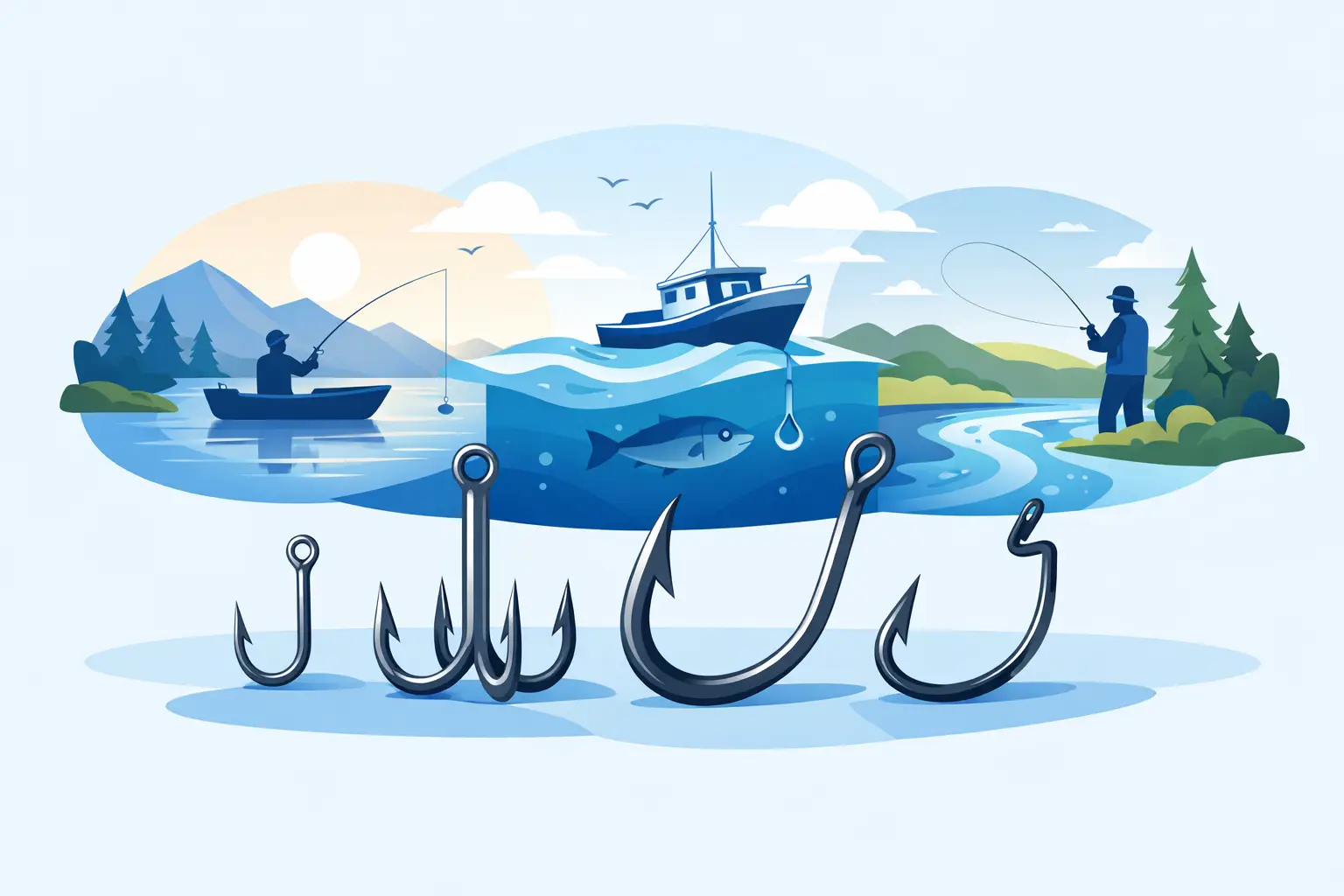
If you've ever stood in front of a wall of hooks wondering what fishing hooks to use, you're not alone. Hook choice can feel overly complicated fast, but for most anglers, the right answer comes down to three things: what you're fishing for, what bait or lure you're using, and how heavy your tackle needs to be.
Pick the wrong hook and you can still catch fish. You may just miss more bites, tear up soft plastics, lose fish on the fight, or spend more time re-rigging than fishing. Pick the right hook and everything gets simpler, from bait presentation to hooksets.
What fishing hooks to use starts with the species
A bluegill, a largemouth bass, a catfish, and a striped bass do not need the same hook. That sounds obvious, but many tackle problems start when anglers try to make one hook style do every job.
For panfish, smaller bait-holder, Aberdeen, or light-wire live bait hooks are usually the practical choice. These hooks work well with worms, crickets, and small minnows, and their lighter wire helps with natural bait presentation. The trade-off is strength. They're great for smaller fish, but not the best choice if you might hook something much bigger around cover.
For bass, worm hooks, extra-wide gap hooks, offset hooks, and some treble hooks cover most situations. If you're Texas rigging soft plastics, an offset worm hook or EWG hook is often the standard. If you're fishing crankbaits or jerkbaits, the treble hooks already matched to the lure are usually there for a reason. You can swap them, but you should do it carefully because changing hook weight can affect how the lure runs.
For catfish, circle hooks, kahle hooks, and strong bait hooks are popular for a reason. Catfish often take natural bait and move off with it, and circle hooks can improve your chances of a corner-of-the-mouth hookup when used correctly. If you like to set the hook hard, though, circle hooks take adjustment. You generally let the fish load the rod instead of snapping back.
For trout, smaller live bait hooks, egg hooks, and fine-wire single hooks are common, especially when fishing bait. If you're using artificial lures in streams or stocked waters, hook size should stay modest. Too large a hook can kill the action on small spoons, spinners, or floating bait rigs.
For saltwater species, strength matters more quickly. You may need live bait hooks, circle hooks, J-hooks, or treble hooks built with corrosion resistance and heavier wire. A hook that works fine in freshwater can become a weak point fast in salt, especially if you don't rinse gear after the trip.
Match the hook style to the bait
The easiest way to narrow down what fishing hooks to use is to look at how the bait sits on the hook.
If you're fishing live worms, minnows, leeches, or cut bait, bait-holder hooks and live bait hooks are often the practical starting point. Bait-holder hooks have barbs on the shank to help keep soft bait from sliding. That makes them useful for beginners and anyone fishing natural bait from shore, a dock, or a boat.
If you're fishing soft plastic worms, creature baits, craws, or stick baits for bass, offset worm hooks and EWG hooks usually make more sense. They let you rig weedless and keep the point tucked for fishing around grass, wood, and pads. EWG hooks give more gap for bulkier plastics, while standard offset worm hooks often work better with slimmer baits. Bigger gap is not always better if the bait bunches up and blocks the point.
If you're nose-hooking finesse plastics, drop shot baits, or small minnows, a drop shot or octopus-style hook is often the better fit. These hooks keep the bait moving naturally with less bulk. They're especially useful when fish are pressured and you need a more subtle presentation.
If you're fishing treble-hook lures like crankbaits, topwaters, and some spoons, stick with trebles unless you have a clear reason to switch. Single-hook conversions can make sense in some fisheries or for easier release, but they also change hookup ratios and lure balance. That's one of those it-depends decisions.
Hook size matters more than most anglers think
Hook sizing confuses a lot of people because smaller numbered hooks get smaller as the number increases, then jump to 1/0, 2/0, 3/0 and get bigger from there.
For smaller fish and finesse presentations, sizes like 8, 6, 4, and 2 are common. For many bass applications, 1, 1/0, 2/0, 3/0, and 4/0 are typical. For larger catfish, striped bass, redfish, or bigger live bait setups, you may go even larger.
A hook that's too small may not hold the bait well or may straighten under pressure. A hook that's too large can make bait look unnatural, reduce lure action, or lead to short strikes. As a rule, use the smallest hook that still fits the bait cleanly and gives you enough strength for the fish and cover you're targeting.
That last part matters. Open-water bass on light line can often be handled with a lighter hook than bass buried in heavy vegetation. The fish might be the same size, but the conditions are not.
Wire gauge and strength are part of the decision
Hook style and size get most of the attention, but wire thickness matters just as much. Fine-wire hooks penetrate easily, which helps when you're using light line, light rods, or finesse tactics. They're a smart fit for panfish, trout, and some drop shot or wacky rig setups.
Heavy-wire hooks are better when you're fishing thicker plastics, heavy cover, braided line, or hard-charging fish. They hold up under pressure, but they also need a stronger hookset. If your rod, line, and drag are on the lighter side, a very heavy hook can cost you fish because it never penetrates well.
This is where many anglers run into avoidable problems. They buy a hook based on package size alone and ignore whether their setup can drive that hook home. Hook choice should match your rod power and line strength, not just the fish species.
Freshwater, saltwater, and seasonal conditions
The answer to what fishing hooks to use also changes with where and when you fish.
In freshwater, you can get away with a wider range of standard hook materials, especially if you replace hooks often. In saltwater, corrosion resistance matters much more. If you're fishing coastal water, bays, inlets, or offshore, choose hooks made for salt conditions and rinse your gear after use.
In colder conditions, especially ice fishing, smaller hooks are often the better play because bait and presentations tend to be more compact. Subtle bites are common, and oversized hardware can hurt your chances. For ice anglers targeting panfish, perch, trout, or walleye, hook size should usually stay lean and efficient.
In heavy summer cover, the opposite can be true. Stronger hooks paired with weedless rigs help you get fish out before they wrap you up. Same angler, same lake, different season, different hook decision.
A simple way to choose the right hook
If you're buying hooks for a general tackle setup, think in terms of categories instead of trying to cover every technique at once.
For everyday freshwater fishing, most anglers are well served by a few small bait hooks for worms and live bait, a few offset worm hooks or EWG hooks for bass plastics, and replacement trebles if they throw hard baits often. Add circle hooks if catfish or live bait rigs are part of the plan.
That approach keeps things practical. You don't need every specialty hook on the rack to be ready for the weekend.
If you shop at a broad-assortment retailer like All Weather Fishing, this kind of category-first buying is usually the fastest way to build a useful hook selection without overspending. Start with the species you fish most, then add a second hook style for the technique you use next most often.
Common mistakes when choosing hooks
A lot of missed fish come from simple mismatches. One is using a hook that's too big for the bait. Another is picking a hook with too little gap for a bulky plastic. A third is using light-wire hooks where heavy cover or bigger fish demand more strength.
There's also the problem of forcing one hook style into every job. Trebles, circle hooks, worm hooks, and live bait hooks each do something different. If you're missing bites repeatedly, the lure or bait may not be the real issue. The hook could be.
And don't overlook sharpness. Even the right hook style won't do much if the point is rolled, dulled, or rusty. Hooks are small pieces of terminal tackle, but they do the final work.
The best hook is the one that fits the job
There isn't one perfect answer to what fishing hooks to use because fishing itself changes by species, bait, water, and season. But there is a practical answer: match the hook to the fish, match the size to the bait, and match the strength to your tackle and conditions.
That keeps your setup simple, effective, and ready for more than one kind of trip. When your hooks match the job, you spend less time second-guessing your gear and more time actually fishing.
